

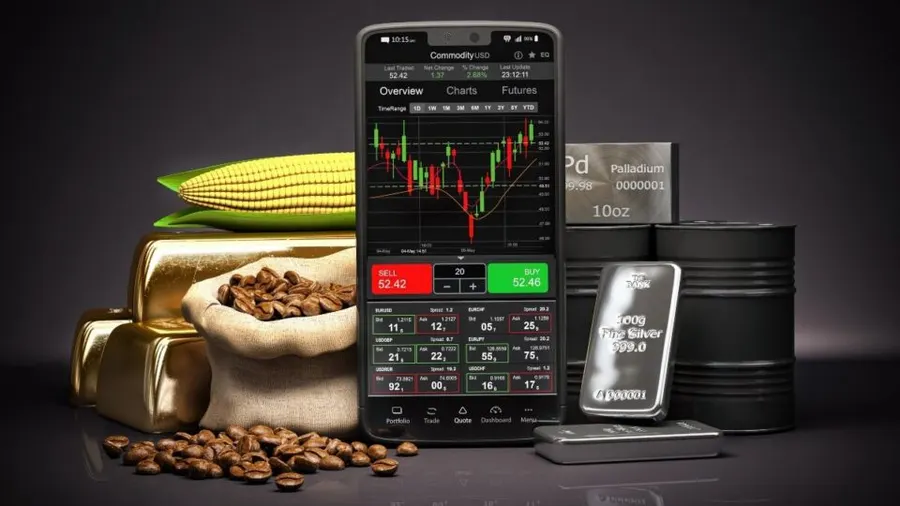
Introduction
Commodity trading plays a critical role in protecting businesses and investors from unexpected price fluctuations in raw materials and essential goods. Since commodity prices often change due to global supply disruptions, economic shifts, and geopolitical developments, trading mechanisms help market participants manage uncertainty effectively.
Risk management through commodity trading allows producers, manufacturers, exporters, and investors to stabilize costs, protect profits, and plan future operations with greater confidence.
Understanding Risk in Commodity Markets
Commodity markets are naturally exposed to various risks that can influence prices and supply availability. These risks can directly affect business performance and investment returns.
Common sources of commodity market risk include
- Price volatility
- Weather conditions affecting agricultural output
- Changes in international demand
- Currency fluctuations
- Political instability in producing regions
- Transportation and logistics disruptions
Commodity trading provides structured methods to reduce the financial impact of these uncertainties.
How Commodity Trading Supports Risk Management
Commodity trading offers several tools and strategies that help businesses and investors control exposure to unpredictable price movements.
Price Hedging Against Market Volatility
Hedging is one of the most important benefits of commodity trading. It allows businesses to lock in prices for future purchases or sales.
For example
- Farmers secure stable crop prices before harvest
- Airlines manage fuel cost risks
- Manufacturers control raw material expenses
This helps organizations maintain predictable operating costs.
Protection from Inflation Risk
Commodity prices often rise during inflationary periods. Investing in commodities can help preserve purchasing power because commodity values typically increase alongside inflation.
This makes commodities an effective tool for balancing financial portfolios during economic uncertainty.
Stabilization of Business Cash Flow
Businesses that rely heavily on raw materials benefit from commodity trading by maintaining stable production costs. Predictable pricing helps organizations manage budgets and avoid unexpected financial stress.
Stable cash flow improves operational planning and long term sustainability.
Reduction of Supply Chain Uncertainty
Commodity trading allows companies to secure supply contracts in advance. This reduces the risk of shortages caused by unexpected disruptions in global markets.
Reliable supply access strengthens production continuity.
Role of Commodity Derivatives in Risk Management
Commodity derivatives are financial contracts that help market participants manage exposure to price changes.
Major derivative instruments include
- Futures contracts
- Options contracts
- Forward contracts
- Swap agreements
These instruments allow traders to reduce uncertainty by fixing prices or creating protection strategies against unfavorable market movements.
Portfolio Diversification Benefits
Commodity trading supports diversification by reducing dependence on traditional investment assets such as stocks and bonds.
Diversification benefits include
- Lower overall portfolio risk
- Improved balance during market downturns
- Protection against currency depreciation
- Increased resilience during economic instability
Including commodities in investment strategies strengthens long term financial security.
Risk Management for Producers and Consumers
Both producers and consumers benefit from commodity trading systems designed to control price uncertainty.
Producers benefit through
- Revenue stability
- Predictable income planning
- Protection against falling prices
Consumers benefit through
- Controlled purchase costs
- Better inventory management
- Improved budgeting accuracy
These advantages contribute to smoother business operations.
Importance of Commodity Exchanges in Risk Control
Commodity exchanges provide structured trading environments that support transparency and reliability in transactions.
Functions of exchanges include
- Standardizing contract specifications
- Ensuring fair price discovery
- Reducing counterparty risk
- Providing market liquidity
- Supporting regulatory compliance
These features strengthen trust and efficiency in commodity markets.
Challenges in Using Commodity Trading for Risk Management
Although commodity trading offers many benefits, certain limitations must be considered.
Common challenges include
- Market complexity for new participants
- Margin requirements in derivative trading
- Exposure to unexpected global events
- Regulatory differences across countries
Proper knowledge and planning help reduce these challenges effectively.
Future Importance of Commodity Trading in Risk Management
With increasing globalization and market interdependence, commodity trading will continue to play an essential role in managing economic risk. Growth in energy demand, infrastructure development, and agricultural consumption will further increase reliance on commodity risk management strategies.
Businesses and investors who adopt structured commodity trading approaches are better prepared to handle market uncertainty and maintain financial stability.
Frequently Asked Questions
What is the main purpose of commodity trading in risk management
The primary purpose is to protect businesses and investors from unexpected price fluctuations in essential raw materials.
How does hedging reduce commodity price risk
Hedging allows traders to lock future prices through contracts, reducing uncertainty caused by market volatility.
Which industries benefit most from commodity risk management strategies
Industries such as agriculture, aviation, construction, manufacturing, and energy production benefit significantly from commodity trading tools.
Are commodity derivatives safe for managing financial risk
Commodity derivatives are effective risk management tools when used properly with market knowledge and strategic planning.
How does commodity trading help during inflation periods
Commodity values often rise with inflation, helping investors protect purchasing power and maintain portfolio stability.
Can small investors use commodity trading for risk management
Yes, individual investors can participate through regulated exchanges and diversified commodity investment products.
Why are commodity exchanges important for risk control
Commodity exchanges ensure transparent pricing, standardized contracts, and secure trading environments that reduce uncertainty in transactions.

Comments are closed.